From strategic decisions shaping the future of the PEFC alliance to discussions on forest resilience, timber construction and sustainable innovation, the PEFC Forest Forum 2026 brought together the global forestry community for a week of exchange and collaboration in Istanbul, Türkiye.
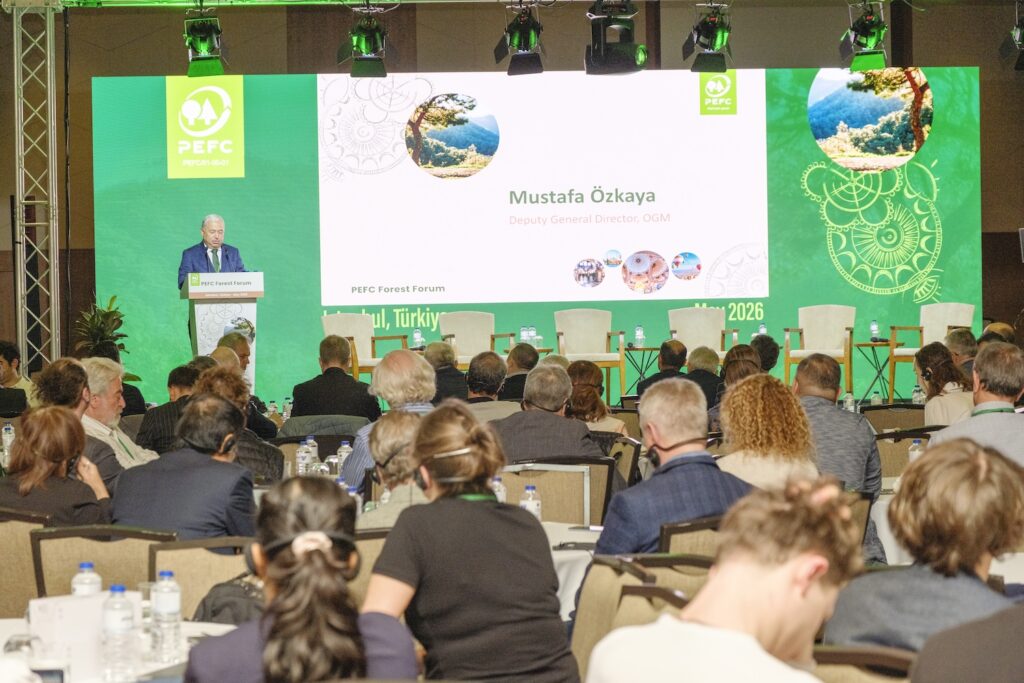
Members and colleagues from 40 countries gathered recently to strengthen connections across the network, share knowledge and explore how PEFC certification can support resilient forests, responsible supply chains and sustainable development. The week culminated in a public conference showcasing Türkiye’s growing role in advancing sustainable forest management and certification.
Strengthening the PEFC alliance
Throughout the week, participants shared experiences and insights from across the PEFC network, discussing opportunities and challenges facing forests and forest-based industries around the world.
A key milestone of the Forum was the 34th PEFC General Assembly, where members approved the PEFC Project Sourcing standard and the associated requirements for certification bodies. These approvals mark an important step forward in supporting responsible sourcing for construction and other project-based sectors.
The General Assembly also welcomed The Navigator Company and Sumitomo Forestry as new PEFC international stakeholder members, further strengthening the PEFC alliance and expanding engagement across the forest sector value chain.
Members additionally elected Emma Berglund and Kurt Ramskogler to the PEFC Nominations Committee.
Exploring sustainable innovation in Türkiye
The public conference day focused on the opportunities and challenges facing Türkiye’s Forest sector as it moves towards its first PEFC Sustainable Forest Management certifications.
Four panel discussions brought together national and international experts to explore how certification can support resilient forests, responsible supply chains and sustainable economic growth.
The first panel examined the role of timber construction in supporting low-carbon development and resilient infrastructure, particularly in earthquake-prone regions. Discussions highlighted innovation in modern timber architecture, the advantages of timber as a high-performance building material, and the growing role of PEFC Project certification in verifying responsible sourcing.
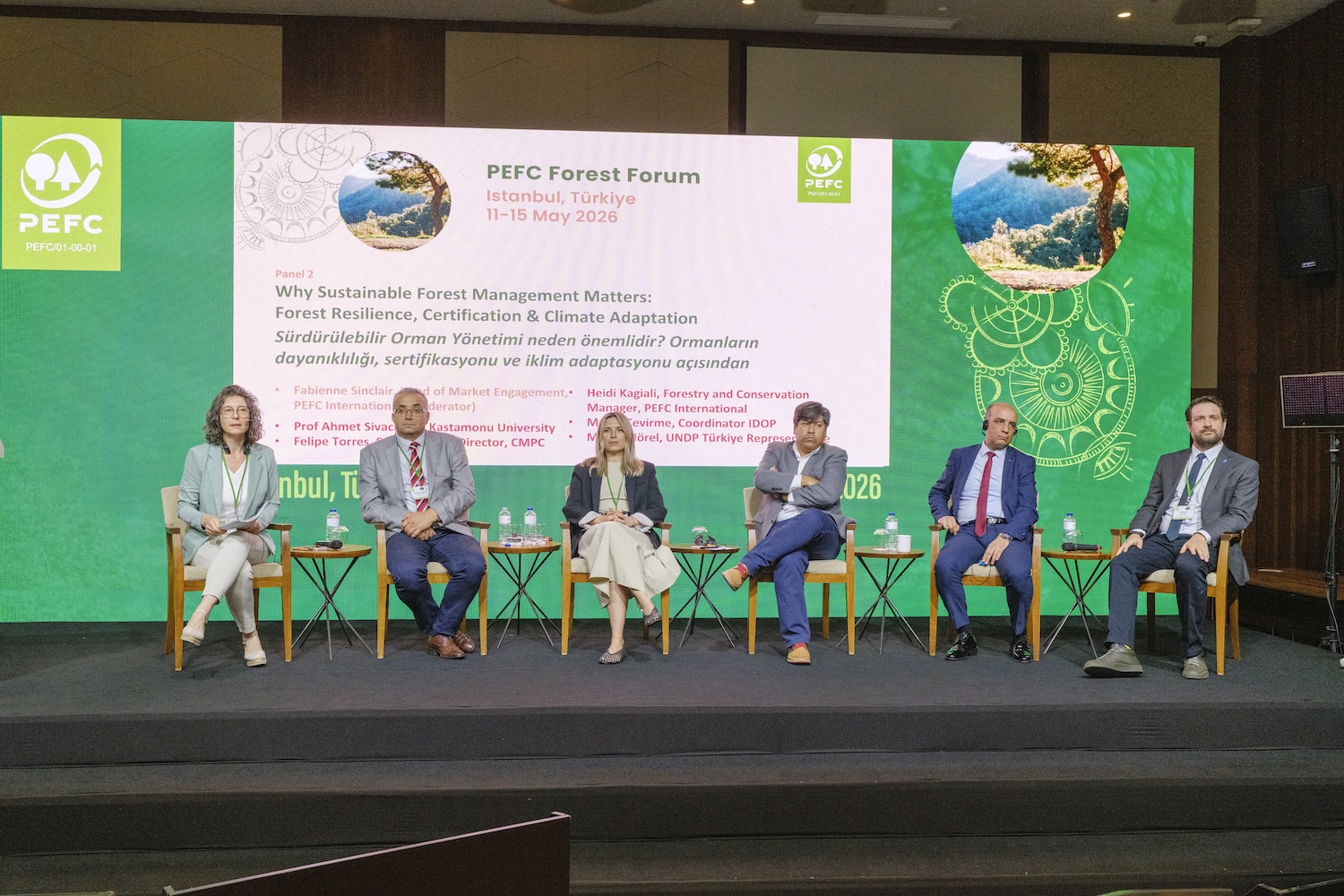
The second panel focused on forest resilience and climate adaptation. Speakers explored how sustainable forest management and certification can help forests respond to increasing pressures from climate change, drought, pests and wildfires, while supporting biodiversity conservation and resilient communities.
Attention then turned to Türkiye’s certification journey, with discussions highlighting the expansion of forest certification, advances in digital monitoring and traceability systems, and the opportunities PEFC certification can create for international market access and credibility.
The final panel explored the potential of non-timber forest products, including medicinal plants, honey, natural oils, mushrooms and cork. Speakers highlighted opportunities for innovation and value-added production, as well as the role sustainable forest-based value chains can play in supporting rural livelihoods and biodiversity conservation.
Learning from the forest
The Forum concluded with a field trip to Istanbul’s Atatürk Arboretum and Belgrade Forest.
Guided by forestry students, participants explored the area’s rich diversity of tree and plant species and learned about its role in forest education and research.
The visit also provided insights into forest fire monitoring and prevention efforts, including a stop at a fire observation tower overlooking the Bosphorus.