(Photo: FSC Peru)
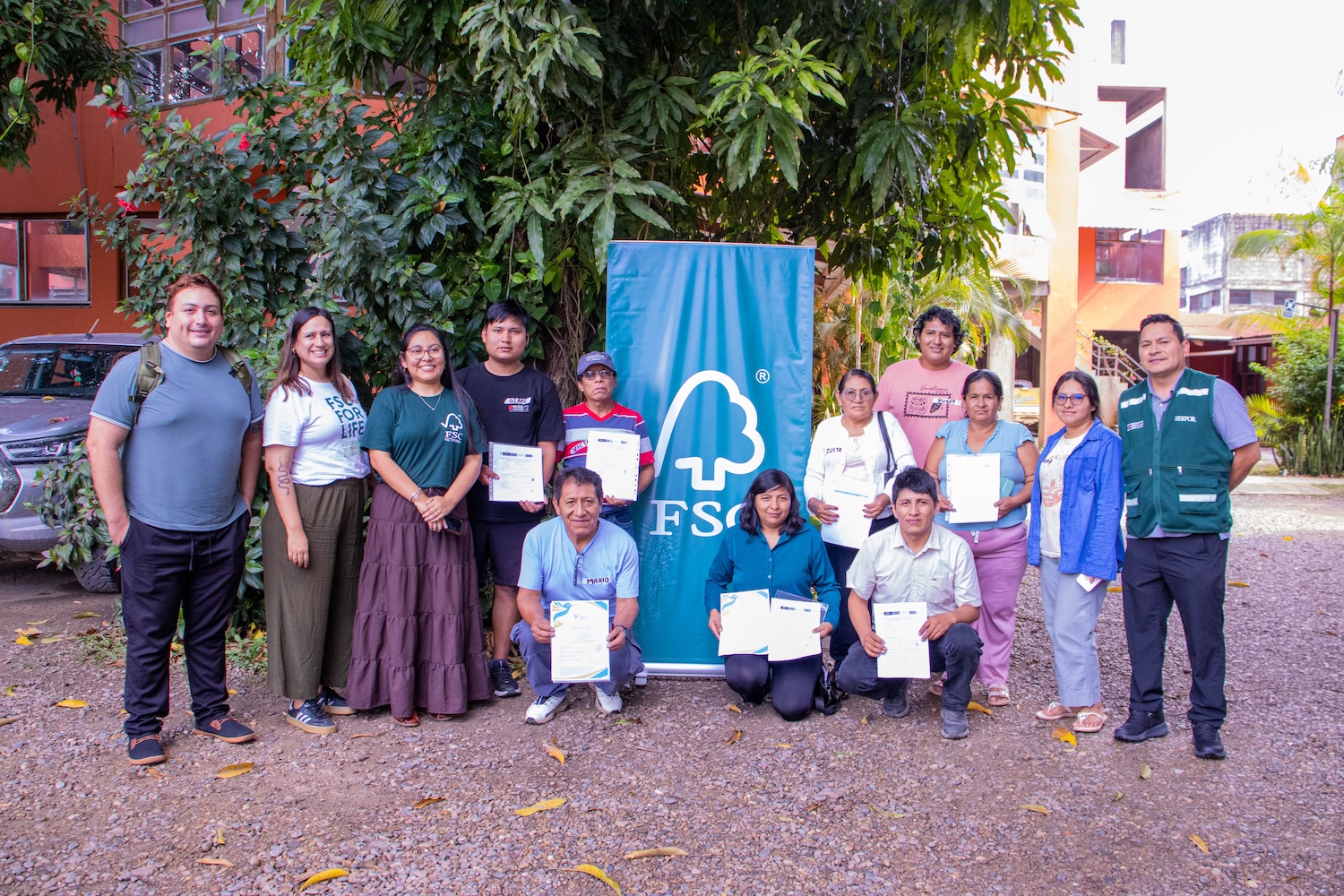
Twelve FSC-certified Brazil nut concession holders in Madre de Dios, Peru, have been officially recognised by the regional government for their commitment to responsible forest management and the conservation of the Amazon rainforest.
The recognition, formalised through Regional Management Resolution No. 0669-2026-GOREMAD-GRFFS, acknowledges compliance with internationally recognised standards for sustainability, legality, traceability and biodiversity conservation. As a result, these producers will receive discounts on forest use fees, an incentive promoted by Peru’s National Forest and Wildlife Service (SERFOR) to encourage responsible forest management practices.
During the first year of certification, concession holders will receive a 15% discount on forest use fees. If certification is maintained, the discount can gradually increase to 55% after five consecutive years and may be combined with other incentives for good forestry practices, reaching a maximum of 70%.
Beyond the financial benefit, this recognition highlights the value of FSC certification and demonstrates how public incentives, combined with voluntary sustainability standards, can deliver tangible benefits for those who manage forests responsibly.
The recognised concession holders are Justa Castro Quispe, Liwiston Vargas Silvano, Mario Pablo Mamani Chura, Ubaldo Fernández Choquehuanca, Cesario Claudio Espinoza Lenes, Isabel Martínez Vargas, Domingo Quispe Pinedo, Franklin Quispe Gómez, Luisa Ochoa Puma, Paulino Quispe Ramírez, Víctor Huamani Ccamo and Víctor Quispe Flores. Together, they manage 10,951.33 hectares of FSC-certified Brazil nut concessions across the provinces of Tambopata and Tahuamanu.
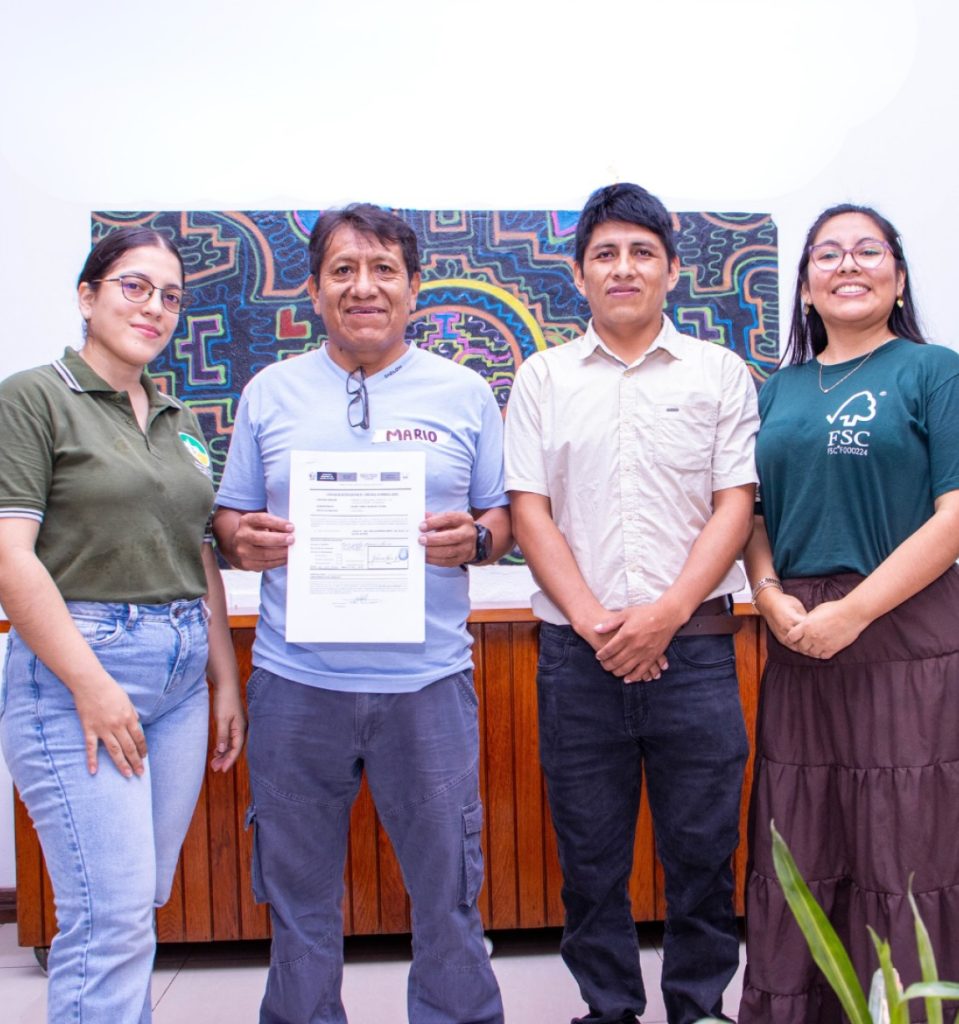
This recognition sets an important precedent for Peru’s forest sector, demonstrating that forest certification can translate into tangible economic benefits for those investing in sustainable forest management. In Madre de Dios, where Brazil nut harvesting is one of the region’s most important forest-based economic activities, this initiative strengthens a production model that supports local livelihoods, conserves the Amazon rainforest and creates new opportunities to access markets that increasingly value responsibly sourced products.